beyond quant
Beyond the Quantifiable discusses how data can serve a cosmopolitical map of reality
00
problem
Modern public policy treats the quantifiable as the ultimate arbiter of truth. Yet this approach systematically erases entire systems of knowledge that cannot be captured in spreadsheets or statistical models. Can Western institutions evolve to genuinely integrate cosmopolitical frameworks and honor indigenous sovereignty and wisdom?
solution
This work stands on foundations built by indigenous peoples across generations. The knowledge systems discussed here represent millennia of careful observation, experimentation, and refinement. They have sustained communities through profound changes while maintaining relationships with land, water, and more-than-human relatives. Indigenous peoples continue this stewardship today, protecting the majority of the world’s remaining biodiversity despite occupying a small fraction of global land area. The knowledge shared here is theirs. The responsibility to honor it, learn from it, and support indigenous sovereignty in defining how it’s used belongs to all of us. With gratitude.
Modern public policy treats the quantifiable as the ultimate arbiter of truth. Yet this approach systematically erases entire systems of knowledge that cannot be captured in spreadsheets or statistical models.
Can Western institutions evolve to genuinely integrate cosmopolitical frameworks and honor indigenous sovereignty and wisdom?
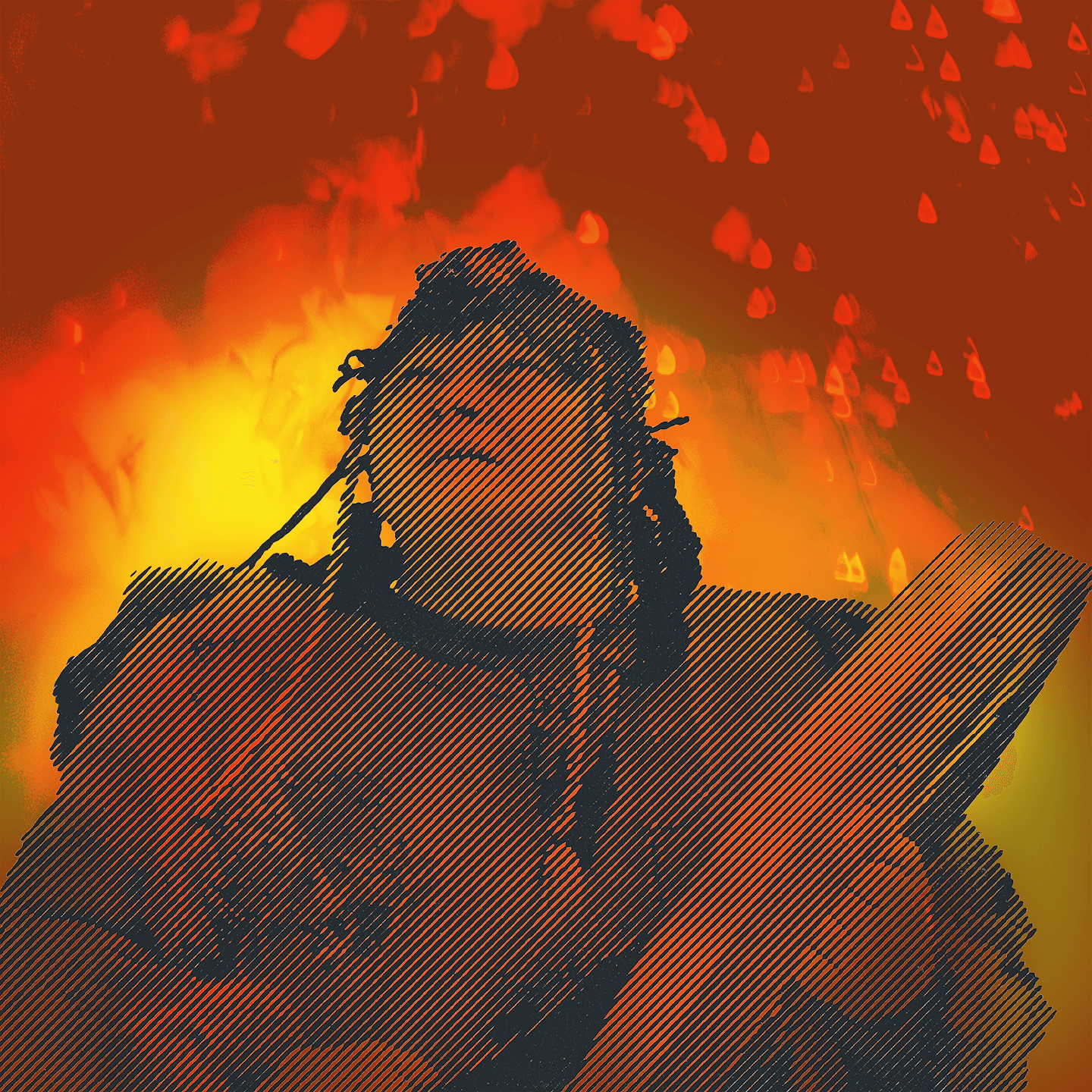
A rainforest appears in two different reports. In the first, it’s calculated as board feet of timber, tons of carbon sequestered, or acreage for palm oil plantations. The numbers are precise and the economic value of extraction is quantifiable. In the second, the rainforest is described as an ancestor, a teacher, and a source of medicine. It’s a living relative with sentience and political standing. The relationship is reciprocal and harmonious—what is taken must be returned with equal or greater value so that there is no net loss.
Both reports attempt to inform public policy. Both are seeking what they understand as the greater good, but they’re working from fundamentally different maps of reality. The first is founded on monetary gain, the second on maintaining a delicate universal balance. This isn’t an abstract philosophical problem.
When policymakers impose the first map onto communities living by the second, programs fail, conflicts erupt, and people die.
Throughout history, imperialism has imposed a worldview and system of beliefs on indigenous societies, leading to catastrophic violence, the erasure of culture, and deep wounding of collective consciousness.
Measurement and data have been a tool to codify imperialist policies. Anthropological data has dehumanized communities, making subjugation tolerant and the duty of the civilized. Economic data has aroused greed and led to exploitive practices, limitless extraction, and theft. Indigenous perspectives and knowledge have been absent from policy methodologies, while simultaneously being victim to the heavy-handed brush used to paint the continent in manifest destiny.
One question emerging from this collision is whether contemporary data systems and attempts to measure for the purpose of prescriptive policy can be reimagined to serve cosmopolitical systems rather than undermine or control them.
We must ask whether Western methodologies, rooted in colonial heritage, have the collective will and capacity to value indigenous cosmologies as legitimate, independent libraries of knowledge, not for extraction but for meaningful contributions to salient policy challenges.
DEFINITION: Cosmopolitics
Cosmopolitics is a framework for understanding politics that extends beyond human affairs to include non-human beings and entities as legitimate political actors. In indigenous contexts, cosmopolitics recognizes that animals, plants, rivers, mountains, and spirits have agency, rights, and voices that must be considered in governance and decision-making. This approach challenges Western political theory, which typically limits political participation to human citizens. Cosmopolitics asserts that the "cosmos" (the entire universe of beings and relationships) is inherently political, requiring humans to maintain reciprocal and responsible relationships with all entities. See Marisol De La Cadena’s Earth Beings: Ecologies of Practice Across Andean Worlds for more on cosmopolitics.
The Western Map
Public policy is the set of actions, laws, and regulations that governments create to achieve specific goals, such as reducing poverty, improving public health, or fostering economic growth. The Western approach is traditionally prescriptive and mechanistic. The motivation for specific policies varies depending on the origin of the proposal, interest groups, lobbying groups, elected officials, budget considerations, and quid pro quos. The public policy arena spins a complex web of competing priorities, often with the true benefactors shifting from the public to specific individuals.
Western political systems privilege individual autonomy and rights as primary organizing principles. Thinkers like Locke, Kant, and Rawls built theories around individuals who possess inherent rights and can form social contracts. This philosophical individualism deeply influences institutions like property rights, voting systems, and constitutional protections. In this system, individuals navigate causal relationships and tensions with others, often reducing social bonds to transactional exchanges and measurable outcomes.
The machinery of governance and commerce runs on this data. Demographic statistics, economic indicators, opinion polls, and mathematical models of cause and effect flow into legal frameworks and political institutions controlled by asymmetric power structures. Policy makers are generally insulated from the downstream consequences of the policy in action.
Data's power lies not just in what it reveals, but in what it displaces. By establishing quantification as the sole legitimate basis for decision-making, Western systems effectively exile other forms of knowing from serious consideration. The cost is profound: reductionism erases what cannot be counted. Complex relationships, spiritual dimensions, historical trauma, and lived experience disappear from view, rendered invisible by the demand for quantification. A knowledge keeper's diagnosis of community illness cannot compete with a statistical model, not because it is less accurate, but because it speaks a language the system refuses to recognize.[1]
What the Numbers Miss
For example, unemployment data shows that 40% of the community is out of work. It shows that levels of unemployment are correlated with substance abuse, depression, and suicide rates. What it cannot show is the cultural context. The spiritual rupture within the collective consciousness. The specific history of the place and the people who may be suffering. The data illustrate "what is" but cannot contribute to "what ought to be." This is not a technical limitation. It's a philosophical one. It is the nature of two-dimensional data that they cannot prescribe three-dimensional solutions. What ought to be is based on a deep lived experience dependent on environment, cultural tradition, norms, and complex systems of ethics that cannot be quantified with utilitarian calculus.
Some things resist quantifiable measurement: hope, despair, the feeling of connection to land, the experience of the sacred. These narratives aren't supplementary considerations in policy debates—they shape how people understand themselves and their world, fundamentally influencing how policies are actually lived and experienced. Any attempt to reduce their impact to a single metric, rather than their relational interdependence, is a constraint of ignorance or injustice.
Using only quantitative data to address complex social problems is like navigating mountainous terrain with a topographic map. The map is useful, but the reality of the environment is multi-dimensional, with stimuli from above and below, involving all senses and capacities. A map can provide incline data, but it cannot cause the muscles in your legs to burn.
This limitation raises research questions about whether alternative methodologies might better capture indigenous relational knowledge that describes the ethereal interconnectedness of the cosmos.
DEFINITION: Traditional Environmental Knowledge (TEK)
Traditional Environmental Knowledge refers to the accumulated body of knowledge, practices, and beliefs that indigenous and local communities have developed over generations through direct experience with their environments. TEK is empirical, place-based, and transmitted through cultural transmission. It encompasses understanding of ecological relationships, resource management, weather patterns, animal behavior, and medicinal plants. Unlike Western science, which often separates humans from nature, TEK integrates cultural, spiritual, and practical dimensions of environmental understanding. See Sacred Ecology: Traditional Ecological Knowledge and Resource Management by Fikret Berkes for more on TEK.
The Indigenous Map
Indigenous cosmopolitics grow from Traditional Environmental Knowledge, rooted in unique cosmologies. These are specific understandings of how the universe is organized and how different species relate to one another and their environments. Among indigenous societies, these cosmological understandings are particularly evident in their intimate, non-dualistic relationship with the natural world. Tim Ingold, discussing hunter-gatherer animists, poetically captures this oneness:
Hunter-gatherers do not, as a rule, approach their environment as an external world of nature that has to be ‘grasped’ intellectually… indeed the separation of mind and nature has no place in their thought and practice.[2]
This sense of oneness embodies a key distinction from Western politics that is both simple and profound: non-human beings possess agency and rights that must be acknowledged in decision-making. Animals, rivers, spirits, and land are not merely resources, but political actors comprising a corpus-politicum.
This framework is based on relational ontologies, where relationships themselves are primary and constitutive of reality. Politics isn't about managing resources or balancing competing human interests; it is about maintaining reciprocal and responsible relationships across the entire cosmos, with a mind and heart devoted to stewardship of the earth for future generations and beyond.
DEFINITION: Relational Ontology
Relational ontology is a philosophical framework asserting that entities do not exist as isolated, independent units but rather come into being through their relationships with other entities. In indigenous worldviews, this means that identity, meaning, and existence itself are constituted through webs of connection rather than through individual essence. A person is not separate from their community, land, or ancestors; they are formed by those relationships. This contrasts sharply with Western ontology, which typically treats entities (especially individual humans) as discrete, bounded units that exist independently before entering into relationships. In relational ontology, the relationship comes first; the entity emerges from it.
In this worldview, land is not a resource for extraction, but a living relative with political standing with which there is a codependent relationship. The forest isn't a timber asset. It's ancestor. It's teacher. It's medicine. It's sacred. All of these at once.
What Western epistemology often dismisses as folklore, indigenous frameworks understand as knowledge accumulated and tested over millennia. Traditional Environmental Knowledge methodology represents empirical observation refined across hundreds of generations and has preserved some of the most biologically diverse regions of the world.
When Maps Collide
Consider a government agency attempting to address a mental health crisis in an indigenous community with increasing rates of suicide. The data points to a growing epidemic. The standard approach analyzes risk factors: unemployment, substance abuse, social isolation, and poor public health. The agency funds programs that have delivered positive results in other communities—typically non-Indigenous—such as cognitive-behavioral therapy, job training, and anti-addiction medication. But in the case of indigenous communities, the programs fail. More often than not, they make things worse and create a divide between the communities and the agencies.
The failure often stems from a symptomatic approach that overlooks underlying causes. Western materialist frameworks position the problem as residing within the individual. The individual brains require repair, but this misses a crucial truth: the disease lives not in isolated minds but in severed relationships—with land, with language, with cultural practices, with each other, with ancestors. A loss of identity and a feeling of cultural abandonment create a negative spiritual tyranny that manifests physically.
The crisis isn't a collection of sick individuals. It's a community that has been systematically disconnected from the sources of meaning and healing that sustained them for thousands of years. Statistical data cannot capture this relationship. More importantly, the epistemic materialism that produces those statistics is structurally incapable of recognizing what it has rendered invisible.
This represents a critical research gap. How do Western institutions learn to recognize forms of knowledge they were designed to exclude through a materialist perspective?
Connecting the Dots
An integrated approach would look different.
Data analytics can identify scale and track outcomes. The numbers matter, but their limits must be recognized from the beginning. Quantitative data represents one kind of knowledge, not the only kind, and certainly not the authoritative kind when dealing with indigenous realities.
The fundamental shift required here is epistemological. Western institutions typically operate from what might be called an additive model of knowledge integration.[3] Indigenous knowledge gets "consulted" or "incorporated" as supplementary information within frameworks that remain unchanged. The core assumptions about causation, intervention, and evidence stay intact. This is extraction messaged as collaboration.
Genuine integration requires recognizing that indigenous knowledge systems offer complete explanatory frameworks, not partial perspectives. They provide coherent accounts of cause, effect, relationship, and remedy that don't require Western validation to be legitimate. When a knowledge keeper identifies that illness stems from disrupted relationship with land, it isn't metaphorical language that needs translation into biomedical terms. It's a precise diagnosis within a different but equally rigorous system of understanding.
Through a centering of indigenous knowledge and understanding, it becomes clear that the crisis may be rooted in historical trauma, the loss of language, and disconnection from land and cultural practices. The healing needed isn't just clinical. It's relational. This approach isn't a complementary medicine secondary to Western treatment; it is the primary framework within which Western data tools should play a supporting role.
Elders and knowledge keepers have authority here. Their expertise isn't just symbolic. It represents sophisticated understanding of consciousness, relationship, and healing that Western systems of measurement are only beginning to acknowledge.
By practicing ontological humility, policy makers can accept that the policy doesn't need to solve a mind-body problem—that in fact, a homogenous mind-body problem does not exist. It must create space for other frameworks that see mind and spirit as interconnected with community and land, recognizing indigenous methodologies and TEK as working, historically proven means of prescription that must inform policy. In many cases, it should lead policy design. The Western model is one approach, not the definitive one.
DEFINITION: Ontological Humility
Ontological humility is the recognition that one's own framework for understanding reality (one's ontology) is not universal or necessarily superior to others. It requires acknowledging that different cultures and knowledge systems may operate from fundamentally different understandings of what exists, what has agency, and how the world is structured. Ontological humility doesn't mean abandoning one's own framework, but rather resisting the impulse to dismiss or override alternative ontologies. In policy contexts, it means creating space for multiple ways of knowing and being without demanding that all perspectives conform to a single epistemological standard. It's the opposite of ontological imperialism, where one worldview is imposed as the only valid reality.
Technology in Service of Cosmopolitics
Technology and modern data tools aren't inherently imperialist. The question is what purpose do they serve and who controls them.
Data systems can be designed for cosmopolitical ends if the people designing them understand that reality is larger than what can be quantified. Indigenous data sovereignty movements are already doing this work. They're asserting control over how data about indigenous communities is collected, stored, analyzed, and deployed.
In Canada, the First Nations principles of OCAP (Ownership, Control, Access, and Possession) were established in 1998 by First Nations leadership to create data governance standards. These principles are a trademark of the First Nations Information Governance Centre and are intended to support First Nations' path to data sovereignty. OCAP asserts that First Nations must have control over data and research processes "from start to finish," including control of resources, review processes, and planning.
In Australia, the Maiam nayri Wingara Indigenous Data Sovereignty Collective, composed of Aboriginal and Torres Strait Islander academics, advocates for indigenous rights in relation to data. They define Indigenous Data Sovereignty as "the right of Indigenous people to exercise ownership over Indigenous Data" through creation, collection, access, analysis, interpretation, management, dissemination, and reuse.
Building on OCAP, the Global Indigenous Data Alliance developed the CARE Principles for Indigenous Data Governance, which stands for Collective Benefit, Authority to Control, Responsibility, and Ethics. These principles explicitly address what earlier open data frameworks like FAIR (findable, accessible, interoperable, reusable) ignored, namely, power differentials and historical contexts.
What these movements share is recognition that data about indigenous peoples isn't neutral information available for anyone's use. It's connected to sovereignty, self-determination, and the right to define how indigenous realities are represented and understood.
Artificial intelligence and big data have potential when guided by integrated wisdom, but the danger is techno-solutionism, the belief that better algorithms will solve problems that are actually about qualitative and competing ontologies. [4] More sophisticated quantification doesn't address the fundamental issue that some things can’t, or shouldn't, be quantified in the first place.
Research into decolonized data practices is emerging but underdeveloped. How do machine learning systems incorporate TEK without extracting it? How do predictive models account for non-human agency? How do databases structure information when relationships matter more than entities? These questions sit at the intersection of computer science, indigenous studies, and political theory.
For more on efforts to decolonize indigenous data, see:
First Nations Information Governance Center
Indigenous Data Sovereignty Collective
Global Indigenous Data Alliance
The Map Is Not the Territory
Data is necessary. Numbers are useful. The ability to see patterns at scale and track change over time matters. None of that is in question. What is in question is whether quantitative data gets to define reality. Whether the map becomes mistaken for the territory itself.
The Western map is powerful for certain purposes. But it was created by people with specific assumptions about what exists, what matters, and how knowledge works. Those assumptions aren't universal. In many cases, they're demonstrably limited.
The indigenous map isn't primitive or pre-scientific. It is sophisticated knowledge refined over timescales that dwarf modern institutions. It has kept communities alive through ice ages and migrations and centuries of attempted erasure. That's an empirical and emphatic track record.
In a world facing interconnected crises of climate, mental health, and inequality, we can't afford to use only half our available knowledge. More precisely, we can't afford to privilege one epistemic system when that system has repeatedly failed to prevent the crises it now claims to solve.
The greater good requires the largest possible map. That means analytical rigor and ontological humility. It means recognizing that rivers might have something to say about water policy. That forests might have political standing. That healing happens through relationships, not just through interventions on isolated individuals.
The Western map offers tools. The indigenous map offers wisdom about what those tools are for. The synthesis is where good governance might actually become possible. Not by choosing one or the other, but by learning when each map applies, who gets to decide, and how power operates in that decision. These are research questions worth pursuing and a future worth seeking.
Research Opportunities
Several questions emerge from this discussion that merit investigation.
First, can quantitative methods be redesigned to capture relational data without flattening it? Current statistical approaches assume independence between variables. Indigenous ontologies assert fundamental interdependence. This epistemological gap suggests potential for methodological innovation.
Second, what governance structures successfully honor multiple ontologies simultaneously? Examples exist. Ecuador's constitution recognizes rights of nature. New Zealand granted legal personhood to the Whanganui River. The Mi'kmaq principle of Two-Eyed Seeing explicitly holds Western and indigenous knowledge in productive tension. These cases offer empirical ground for comparative analysis.
Third, how do participatory research frameworks shift when indigenous communities aren't subjects but partners? Co-creation rather than consultation changes who has power over the process. It changes what questions get asked and the findings. Research into these methodological transformations is sparse.
Fourth, what metrics might capture relational health? Is language being passed to children? Are traditional foods accessible? Can people practice ceremony? Are relationships with land being restored? These are measurable things, but they require asking different questions than standard policy analysis asks. Can existing psychometric scales help quantify these multi-dimensional variables without reducing them to static data?
Fifth, how do institutions learn to recognize forms of knowledge they were designed to exclude? This might be the central question. Western bureaucracies evolved specifically to create standardized, quantifiable, controllable processes. Indigenous knowledge is contextual, relational, and resistant to extraction. The structural incompatibility is based on fundamentally divergent maps of reality. Researching institutional transformation at this level means examining power itself, the scientific institution, history, and the nature of being and consciousness. A heavy lift with an infinite timeline.
With Gratitude
This work stands on foundations built by indigenous peoples across generations. The knowledge systems discussed here represent millennia of careful observation, experimentation, and refinement. They have sustained communities through profound changes while maintaining relationships with land, water, and more-than-human relatives. Indigenous peoples continue this stewardship today, protecting the majority of the world's remaining biodiversity despite occupying a small fraction of global land area. Their resistance to extractive systems, their maintenance of linguistic and cultural diversity, and their insistence on relational ways of knowing offer pathways forward that dominant systems desperately need. The knowledge shared here is theirs. The responsibility to honor it, learn from it, and support indigenous sovereignty in defining how it's used belongs to all of us. With gratitude.
Footnotes:
[1] See Smith (2012) on how Western research frameworks systematically exclude Indigenous knowledge; Santos (2014) on "epistemicide" and "abyssal thinking" that renders non-Western knowledge non-existent; and Wilson (2008) on the dismissal of Indigenous ways of knowing by Western academic and policy systems.
[2] Ingold, T. (2000). The Perception of the Environment: Essays in Livelihood, Dwelling and Skill. New York: Routledge. P. 42
[3] Smith, L. T. (2012). Decolonizing Methodologies: Research and Indigenous Peoples (2nd ed.). London: Zed Books. (Original work published 1999)
[4] Morozov, E. (2013). To Save Everything, Click Here: The Folly of Technological Solutionism. New York: PublicAffairs
year
2025
timeframe
7 days
tools
notebookLM
category
Research